OK I disassembled the whole thing and installed a copper plate. There’s no comparison! Instead of reaching 85°C in 5s, it reaches 48°C. It’s now been running stress-ng on the 12 cores for one minute, and one cluster occasionally reaches 60°C. And this with the fan still spinning at a very low speed that nobody would complain about, even in a living room.
I must confess I had some doubts about the heat spreader. It’s made of two flat copper pipes between the pad that touches the CPU and the fins:
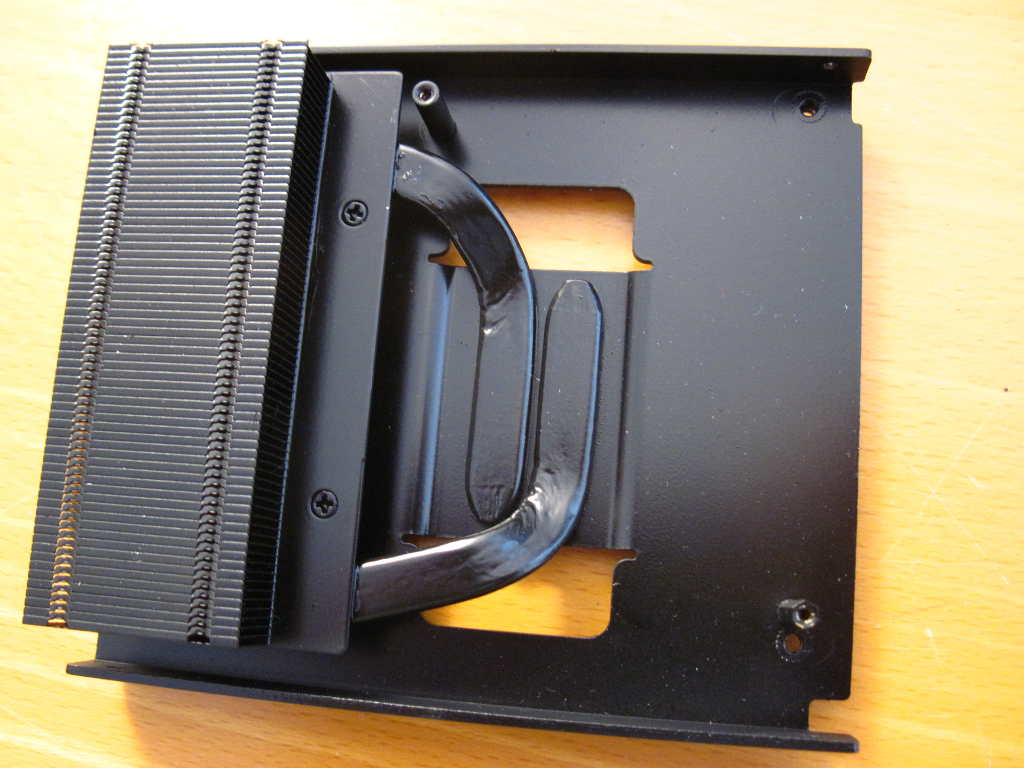
But as we’ll see, I was wrong, this part seems to be working pretty well in the end.
The real issue really is the pad itself which doesn’t touch the CPU well, and which is designed for larger CPUs:
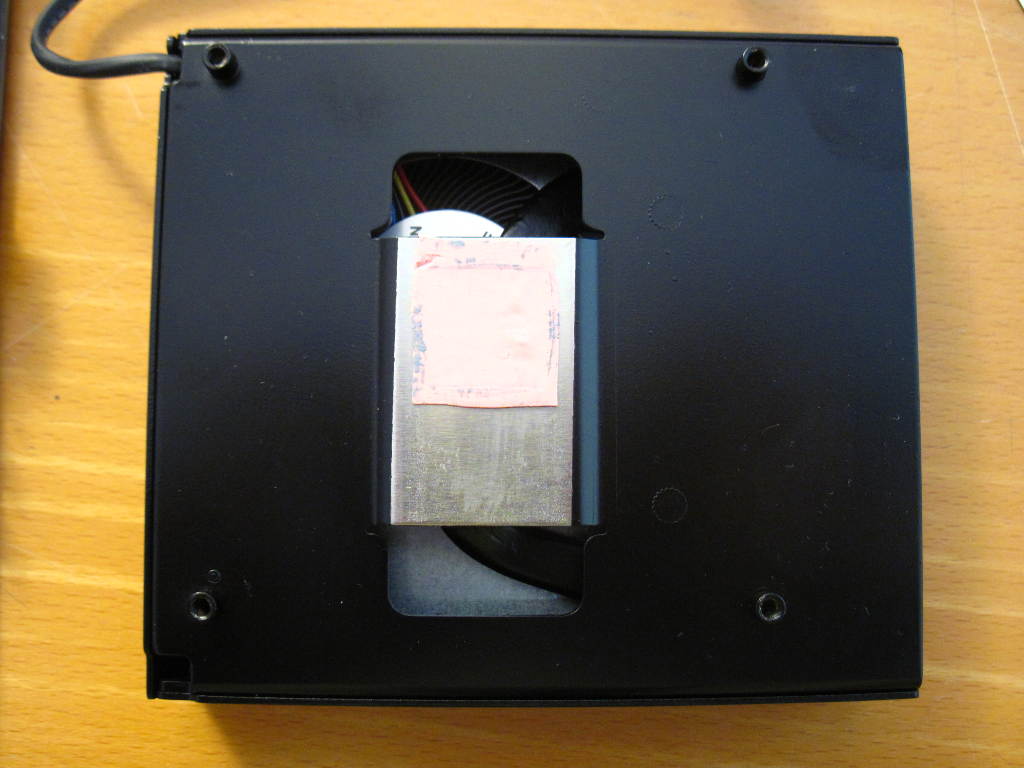
As you can see on the photo above, the silicon die is only in contact with approx 1/3 of the flat pad surface, and it’s likely that its thermal resistance is not that good since it’s a thin aluminum plate (1-2mm thick at best). Also, there are holes which allow the fan to pick hot air from the SoC and board and recirculate it into the fins to try to cool them…
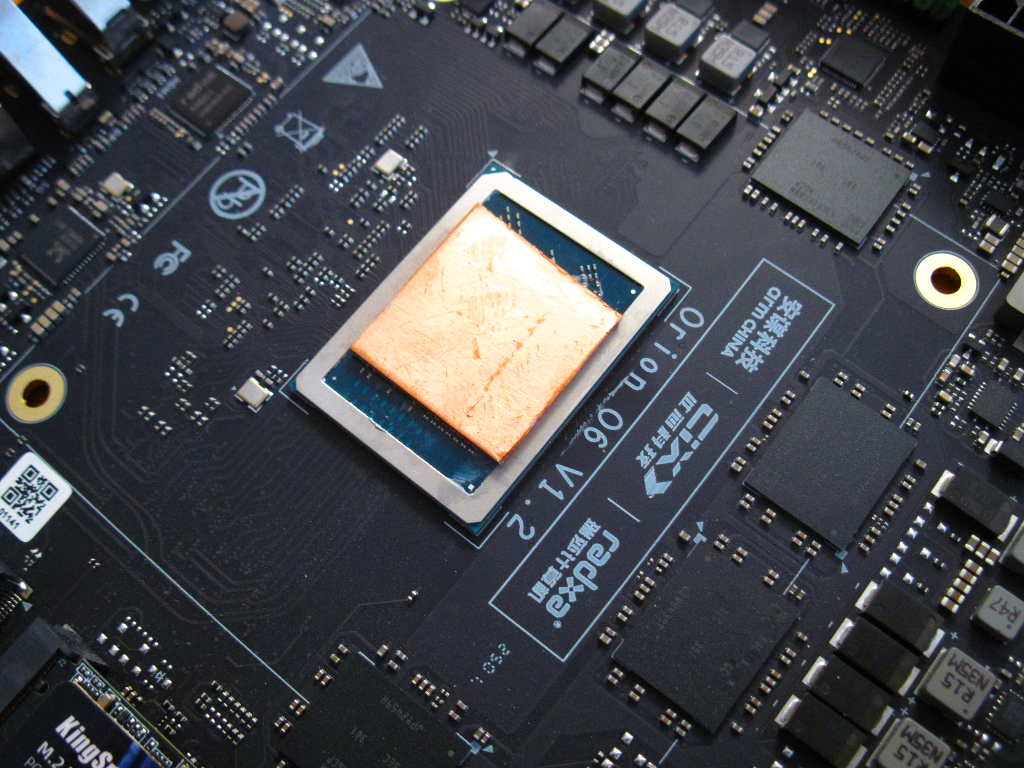
Thus I installed a 1mm thick copper plate on top of the die (with a thin layer of thermal grease of course). It’s larger than the die so that it will help make a larger contact with the heat sink:
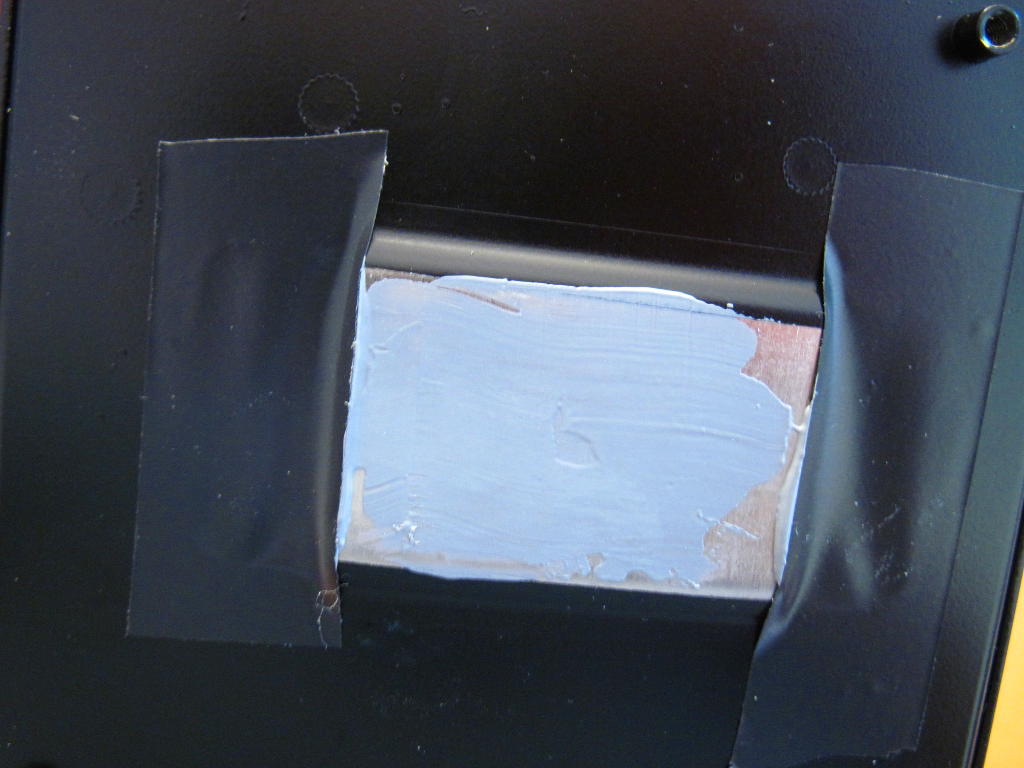
I spread paste all over the heatsink’s pad, and using electrical tape I plugged the holes that allowed it to pick hot air from the bottom:
And now, after 25mn of running stress-ng on all cores (clusters at 3.1, 2.7, 2.6, 2.6, 1.8, 1.8 GHz), the hottest core oscillates between 63 and 64°C, and hot air goes out of the box, which is now cooler to the touch than before by the way (31.5°C). And the fan is still not at full speed, which is quite a relief for my ears. I stopped stress-ng at 25mn and the fan stopped almost immediately.
My guess is that the thickness of the copper plate is the most important factor here, to make a much better contact between the heat sink and the die.
I strongly suspect that this heatsink was designed for thicker x86 SoCs. I don’t know the level of customization that can be done on it (I’d assume that it will be difficult to file the screw legs). But
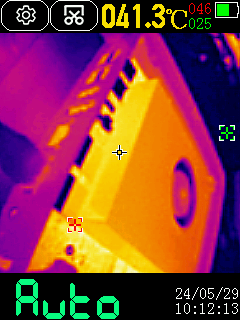
finding 0.5-1mm thick copper shims the size of the SoC to distribute with the kit would really do wonders IMHO. Here’s the thermal image after removing the bottom cover with stress-ng running. It blows air at 41.5°C while the SoC was running around 62, that sounds good.
At least now the AI kit enclosure is always better than the default one from a noise perspective 