If the router developers are here, I’d love for the next router to be like this )
After looking at a large number of routers with 4G and Wi-Fi modules, I came up with
this idea for a new Radxa E25 router, which is already four years old, as stated on the wiki.If I’m not mistaken, that’s November 2022🤖
I thought that if this router had a 4G module and a Wi-Fi module, it would be a versatile device,
which could be used at home on a desk, in the office, and whilst travelling.
But what is this router missing?
If the developers decide to turn the entire ‘Network Computer’ range into a single router rather than a universal single-board computer,
then, in my view, that would be the right decision.
A router doesn’t need a powerful GPU or an amazing NPU; the ones currently included can be removed to free up space for a display, for example,
as these features are useless for OpenWRT or represent only 1% of potential usage.
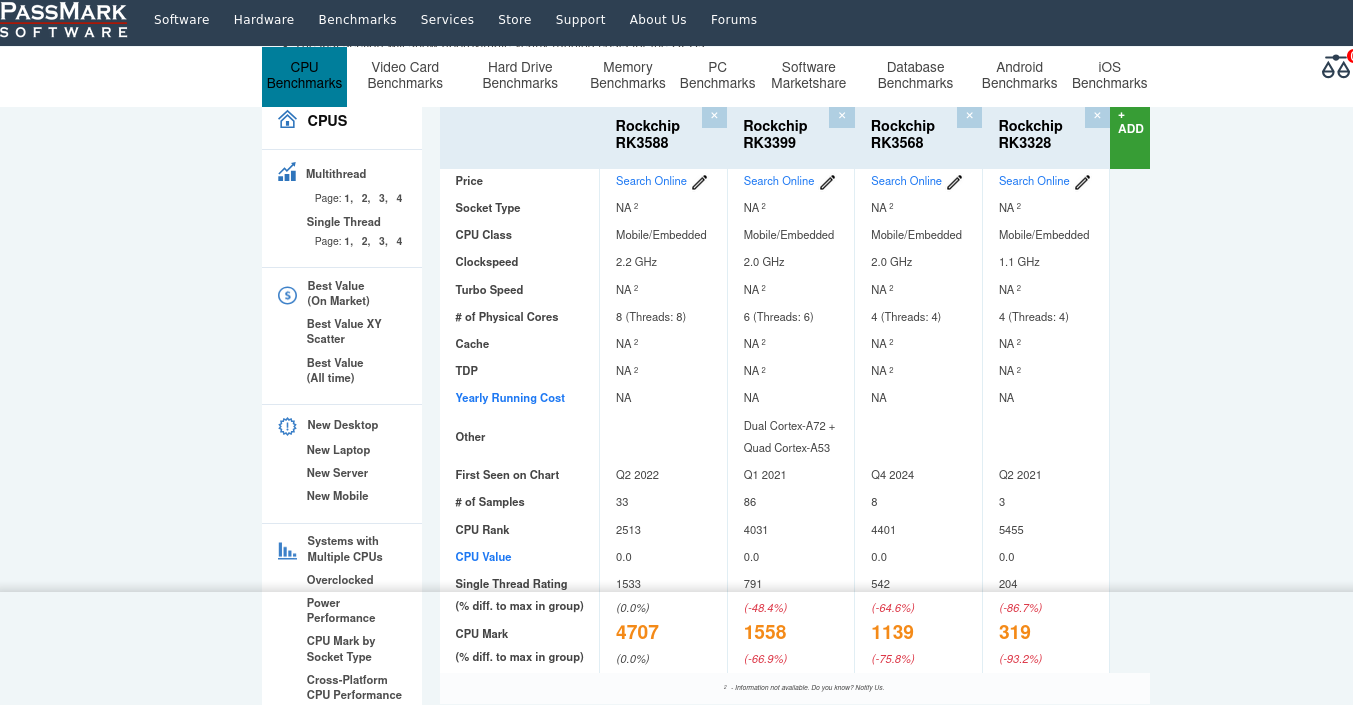
As for the chip, in my opinion, the Rockchip RK3399 is the best solution; the same chip is used in the NanoPi R4S router.
Rockchip devices based on the RK3399🚀 can be used with open-source software. Single-board computers — Free Software Foundation — Working together for free software
There is no point in installing a more powerful chip; it would be excessive in terms of both power and energy consumption.
Antennas also need to be added so that they look aesthetically pleasing rather than sticking out like a deer’s antlers))
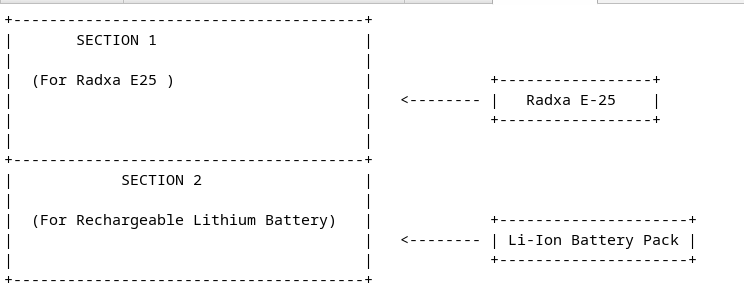
And the most important idea I had was about modularity for such a router, and my solution would be to create a metal casing
into which the router and battery can be placed. This solves many problems: for example, users who need a router at home or in the office
simply buy the router, whilst those planning a trip can buy the metal casing separately and slot the router and rechargeable battery inside.
Currently, the board has two slots: one for a 4G module and the other for a Wi-Fi module; there is also a nano SIM card slot, making this a very versatile solution.
As I mentioned earlier, modules such as the Sierra AirPrime EM7455 4G LTE (blob-free) – one of the best modules supporting
the widest range of frequencies, as well as the Qualcomm Atheros AR9380 /AR5BXB112 (blob-free) , a dual-band module (2.4/5 GHz) supporting speeds of up to 450 Mbps
Here’s another innovative and interesting idea that you won’t find anywhere else!
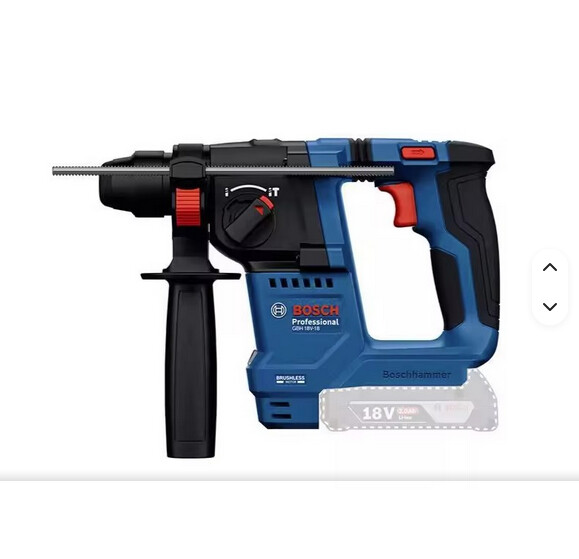
The idea is to design a router modelled on Bosch household appliances
with quick-release batteries, something like this (see screenshot)
RK3399 is totally unsuitable for a router. It has too many small cores and too few large ones, or useless large ones depending how you see it. Its network controller is not efficient for a router and its PCIe lanes are slow and outdated (also there are reliability issues with PCIe on that chip). Next, the chip heats a lot. That would just make a slow router that heats a lot. RK3399 is a generic chip that’s made for laptops/tablets, not routers.
You’d have better luck with 3568 which is a great chip, is extremely well supported in mainline, remains totally cool even under load. It has two PCIe Gen3 lanes and one Gen2 lane, it’s already better, and even sufficient to connect a 10G chip. It’s based on 4xA55 which are way more efficient on memory accesses and also on concurrency (which counts for networking). The larger 3582 as used in E52C is nice as well but it has less PCIe lanes (2 or 3 Gen2).
Note that I do have an R4S and it’s a great machine (except when you need to debug a failing boot since it lacks a console port). But it heats more than the E52C and has less powerful network. In fact its network is exactly the same as in the E20C which heats much less (and has a console port). Also for high-performance routing you’d rather avoid boards with two different ethernet controllers (rtl8169 and st_gmac here) as you’ll usually observe different CPU usage or even behavior depending on the direction of the traffic:
willy@r4s:~$ ethtool -i eth0
driver: r8169
version: 5.15.35-rockchip64
firmware-version: rtl8168h-2_0.0.2 02/26/15
expansion-rom-version:
bus-info: 0000:01:00.0
supports-statistics: yes
supports-test: no
supports-eeprom-access: no
supports-register-dump: yes
supports-priv-flags: no

willy@r4s:~$ ethtool -i eth1
driver: st_gmac
version: Jan_2016
firmware-version:
expansion-rom-version:
bus-info:
supports-statistics: yes
supports-test: no
supports-eeprom-access: no
supports-register-dump: yes
supports-priv-flags: no
But for moderate speeds that’s totally fine and it can save one PCIe lane for something else (e.g. WiFi in your case). Note that for 4G usually it’s done over USB and there are usually plenty of USB ports in such devices.
Thank you very much for your reply.
It’s great that you have an R4S; I was also thinking of buying that router or single-board computer—I’m not sure what to call this device exactly—but when I happened to see the Radxa E-25, I realised that’s exactly the device I want.
Why?
The chip is significantly better – you’ve confirmed this and the tests back it up too. Furthermore, it’s very important that the Radxa E-25 supports 4G and Wi-Fi, as well as having a nano SIM card slot, USB Type-C (handy for a power bank), 2x 2.5G Ethernet, a microSD card slot for storage or the OS, and it’s also very compact in size; this makes the device versatile. I’ve been looking for something like this for ages; you can check for yourself – there’s nothing else in this size, price range and quality. It’ll either be more expensive or larger.
As I wrote above, the GPU and NPU in this device are unnecessary if you use it as a router.
I see there are six network devices in the range; they almost all duplicate each other’s functions. OpenWRT doesn’t need such power and features; it’s overkill.
It seems to me that it would be logical to create devices tailored to specific tasks rather than universal devices that duplicate each other’s functions, and to state these aims and tasks in the device descriptions (my personal opinion).
For example:
device #1 - a home router running OpenWRT (model …)
device #2 - a single-board computer for TV (model …)
device #3 - a single-board computer for running Gnu/Linux operating systems (model …)
device #4: - a single-board computer for gaming (model …)
Device #5: - a travel and home Cellular Router based on OpenWRT(model …)
Then check the E52C. Single use devices make it much harder to manage stocks. You never know upfront which one will sell the most, and trends can change just because of a youtube video. More versatile devices help in this area and the price is not much higher (e.g. the cost of 1 vs 2 RJ45 connectors doesn’t change the total price much). A mini-pcie or m2 connector inside neither. You’ll need spare lanes however. So it’s logical that vendors try to make reasonably versatile boards covering multiple device types at once for a given price.
I see what you mean, but in my opinion, versatility isn’t the best solution for technical tasks—if you remember the days when they sold devices like this ))
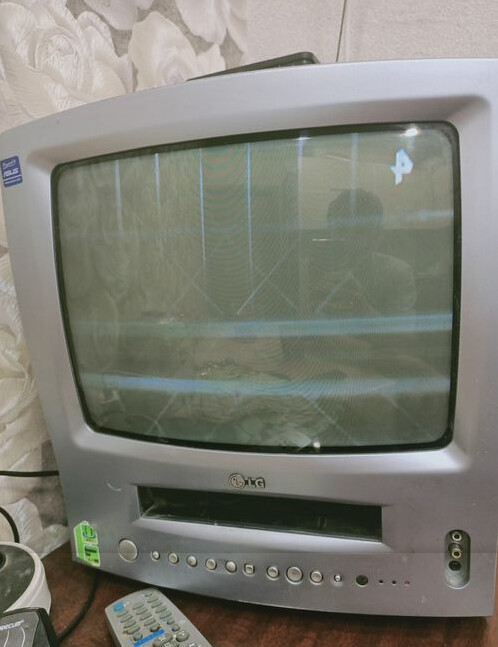
Everyone knew it was better to buy a TV and a VCR separately, and that the quality was significantly better.
As an example of devices designed for specific tasks rather than being all-purpose, there’s a company called Gl.Inet—take a look at the structure of their website.
Sorry but this is completely unrelated. For the SBC part you were talking about minor variations of the same product which involve very tiny cost differences (one or two RJ45 sockets etc) and no impact on stability nor repairability. Above you’re speaking about merging two completely different products in one, which just doubles the cost and increases the risk of failures. Let’s not conflate everything please.
The discussion above is about powering the SBC (SBC + battery). I didn’t say we need to add more GPUs or NPUs to make the SBC even more versatile!
But I think everyone has their own take on this concept. I wrote above that I’m a proponent of technical devices designed for specific tasks, rather than creating a “technical salad” for every possible task.
As for this particular device, I like it because it embodies what I described above: it’s an advanced networking device that’s also compact.

 – one of the best modules supporting